Genetika člověka
 Mikrobiologické aplikace
 NGS
 Rapid testy

 PCR plasty
 Pipetovací špičky
 Plasty pro buněčnou kultivaci
 Systém pro dlouhodobé skladování vzorků
 Zkumavky

 Třepačky
 Suché lázně
 Centrifugy
 End Point cyclery
 Real-time PCR cyclery
 Fluorometry
 Spektrofotometry
 Izolátory nukleových kyselin
 Pipetovací roboty
 Biobanking
 Live Cell Imaging

 Jednokanálové
 Multikanálové
 Sérologické pipety
 Jednorázové pipety

 Buněčné kultury
 PCR, qPCR, RT
 Detekce Mycoplasmat
 Reverzní transkripce

 Alergie
 Intolerance
 Elisa
 Imunologické analyzátory
 Veterinární imunologie
 Alergie u zvířat
 Intolerance u zvířat

 Čtečky identifikačních čipů
 Termočipy
 Biochemie
 Imunoanalýza


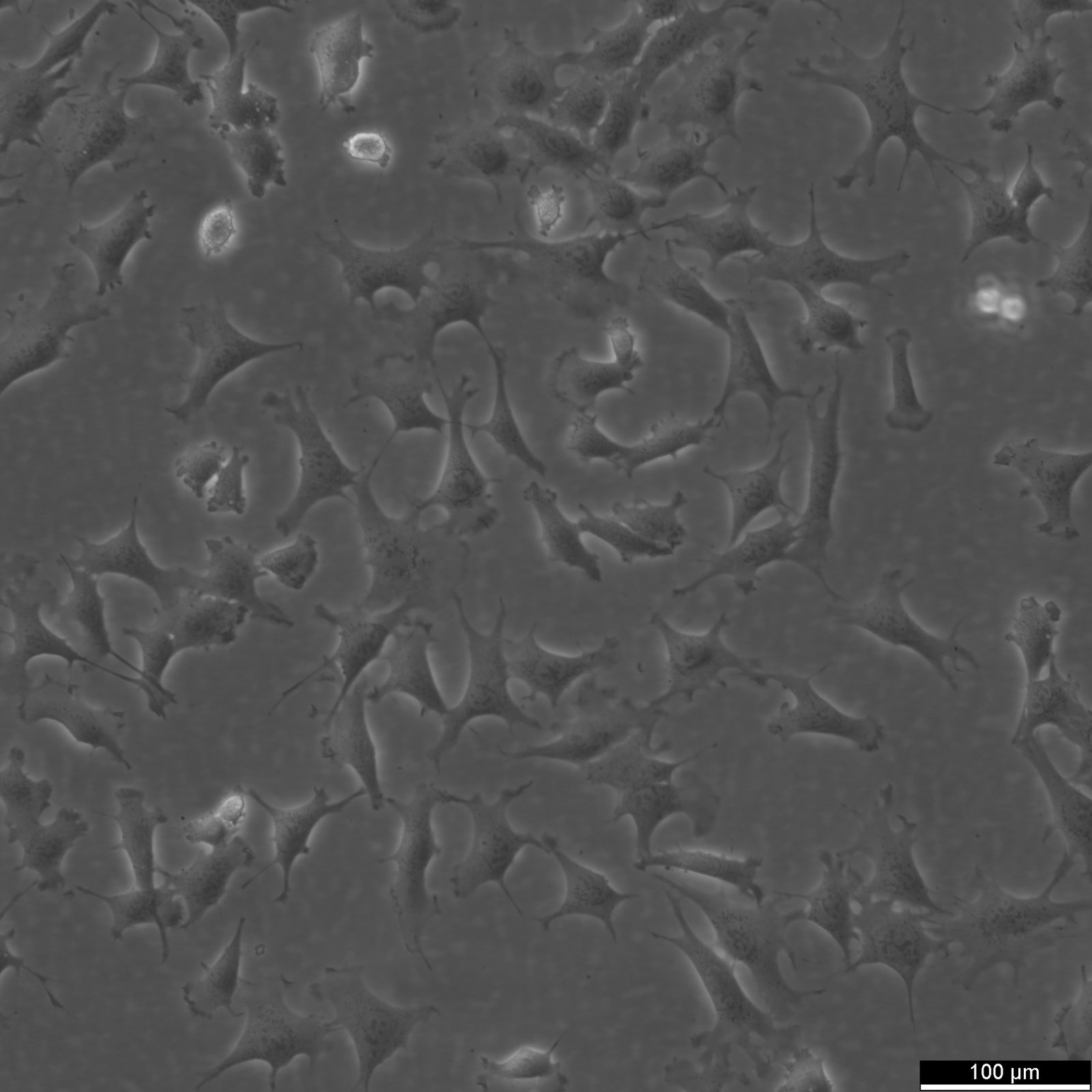

C17.2 Cells
| Unit |
3 x 10^6 cells/ml |
|---|---|
| Cell Type |
Immortalized Cells |
| Tissue Type |
Mouse cell lines |
| Organism |
Mouse |
| Donor History | |
| Growth Properties |
Adherent |
| Growth Conditions |
Culture medium: DMEM ,w: 4.5 g/L Glucose ,w: 4 mM L-Glutamine ,w: 3.7 g/L NaHCO3 ,w: 1.0 mM Sodium pyruvate (Cytion article number 820300a). Supplements: Supplement the medium with 10% FBS. Dissociation reagent: Accutase. Seeding density: 2 to 4 x 10⁴ cells/cm². Freeze medium: As a cryopreservation medium ,we use complete growth medium (including FBS) + 10% DMSO for adequate post-thaw viability ,or CM-1 (Cytion catalog number 800100) ,which includes optimized osmoprotectants and metabolic stabilizers to enhance recovery and reduce cryo-induced stress. Incubation atmosphere: 37°C ,5% CO2 ,humidified atmosphere. |
| Immortalization Method | |
| Full Information |

The C17.2 cell line is a neural progenitor line derived from the mouse cerebellum using retroviral-mediated oncogene transfer with the avian myc gene. It is one of several lines developed to study the differentiation potential of neural progenitor cells, particularly focusing on neuron and glial cell lineages. C17.2 cells exhibit key characteristics of neural progenitors and can differentiate into both neuronal and glial cells under appropriate conditions, making them valuable for studies on neural development, neurogenesis, and gliogenesis.
One defining feature of C17.2 is its potential to differentiate into distinct neural cell types while maintaining mitotic potential, allowing for extended culture and experimental manipulation. This line expresses markers characteristic of neural stem and progenitor cells and can be induced to express lineage-specific markers depending on the differentiation protocol. The stability and multipotency of C17.2 enable its use in examining factors affecting lineage commitment in neural cells, as well as its application in neural repair and regeneration research.
Researchers employ C17.2 cells in both in vitro and in vivo contexts to understand mechanisms controlling cell fate within the central nervous system (CNS). In addition, the line’s well-characterized gene integration sites and consistent expression of specific neural markers make it a reliable model for neurodevelopmental studies and for exploring the potential therapeutic roles of neural progenitor cells in neurodegenerative disease models.
Společnost Cytion vznikla v roce 2004 v německém Heidelbergu s jasným vědeckým posláním: dodávat ověřené lidské a zvířecí buněčné linie bez kontaminace, připravené za přísně kontrolovaných laboratorních podmínek.
Postupně se vypracovala ve spolehlivou buněčnou banku, která slouží akademickým laboratořím, biotechnologickým firmám i farmaceutickým výzkumným týmům po celém světě. Klade přitom důraz na reprodukovatelnost výsledků, přísnou kontrolu kvality a dlouhodobá partnerství.