
 Genetika člověka
 Mikrobiologické aplikace
 NGS
 Rapid testy

 PCR plasty
 Pipetovací špičky
 Plasty pro buněčnou kultivaci
 Systém pro dlouhodobé skladování vzorků
 Zkumavky

 Třepačky
 Suché lázně
 Centrifugy
 End Point cyclery
 Real-time PCR cyclery
 Fluorometry
 Spektrofotometry
 Izolátory nukleových kyselin
 Pipetovací roboty
 Biobanking
 Live Cell Imaging

 Jednokanálové
 Multikanálové
 Sérologické pipety
 Jednorázové pipety

 Buněčné kultury
 PCR, qPCR, RT
 Detekce Mycoplasmat
 Reverzní transkripce

 Alergie
 Intolerance
 Elisa
 Imunologické analyzátory
 Veterinární imunologie
 Alergie u zvířat
 Intolerance u zvířat

 Čtečky identifikačních čipů
 Termočipy
 Biochemie
 Imunoanalýza


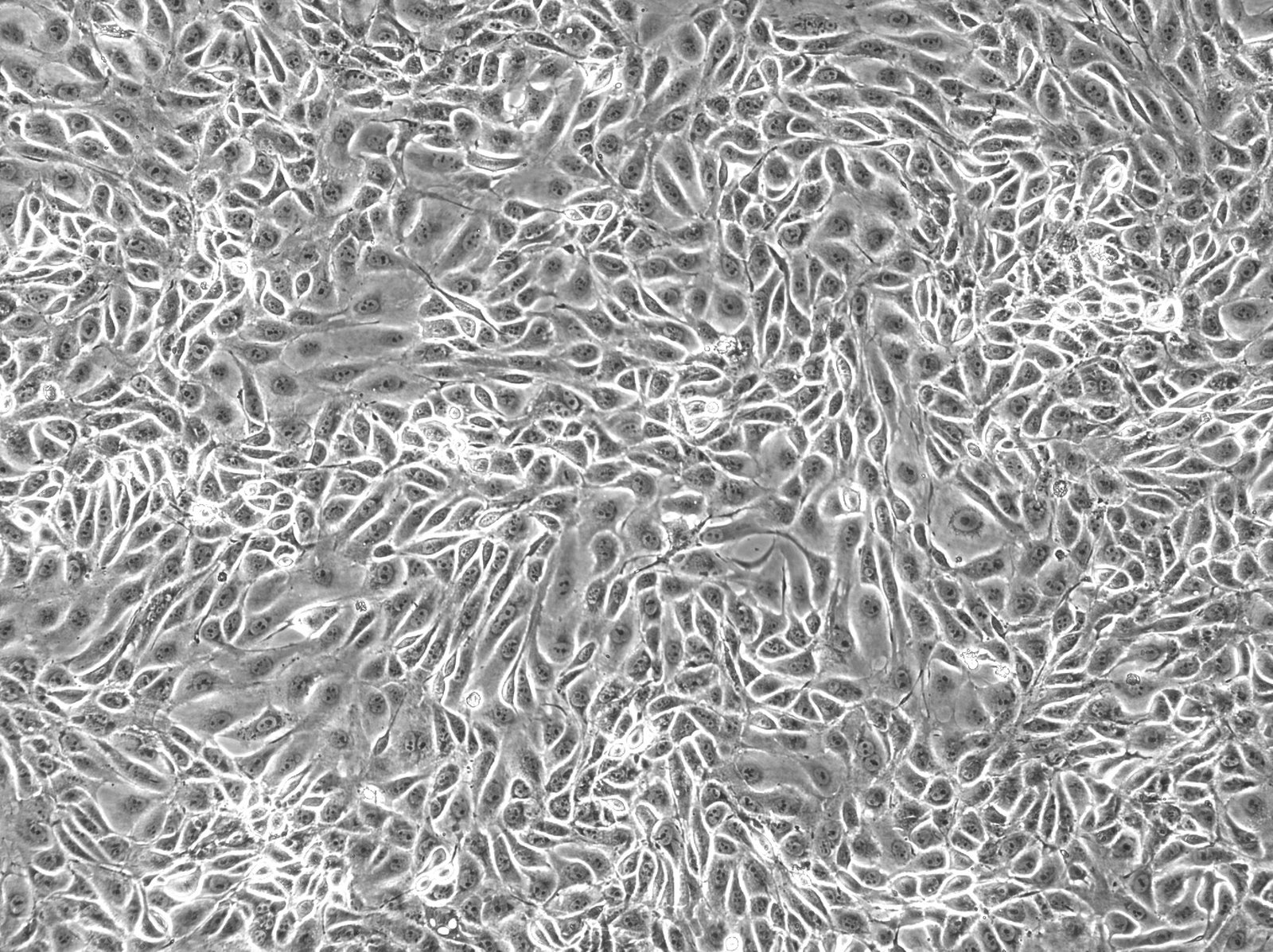

3D4/21 Cells
| Unit |
3 x 10^6 cells/ml |
|---|---|
| Cell Type |
Immortalized Cells |
| Tissue Type |
Pig cell lines |
| Organism |
Pig |
| Donor History | |
| Growth Properties |
Adherent |
| Growth Conditions |
Culture medium: RPMI 1640 ,w: 2.0 mM stable Glutamine ,w: 2.0 g/L NaHCO3 (Cytion article number 820700a). Supplements: Supplement the medium with 10% FBS. Dissociation reagent: Accutase. Seeding density: 1-3*10^4/cm². Freeze medium: As a cryopreservation medium ,we use complete growth medium (including FBS) + 10% DMSO for adequate post-thaw viability ,or CM-1 (Cytion catalog number 800100) ,which includes optimized osmoprotectants and metabolic stabilizers to enhance recovery and reduce cryo-induced stress. Incubation atmosphere: 37°C ,5% CO2 ,humidified atmosphere. |
| Immortalization Method | |
| Full Information |

The 3D4/21 cell line is a porcine alveolar macrophage model extensively used in studies involving immune responses and viral infections. These cells are particularly valuable for research on respiratory infections in pigs, such as those caused by swine influenza virus (SIV) and Senecavirus A (SVA). Due to their origin from alveolar macrophages, 3D4/21 cells serve as a critical in vitro system for examining host-pathogen interactions, focusing on the immune mechanisms that pigs deploy against respiratory pathogens.
3D4/21 cells are often utilized to explore the molecular pathways triggered during infections. For example, in the context of SIV infections, studies have shown that 3D4/21 cells mount an immune response through the expression of various cytokines and viral recognition receptors like RIG-I and TLR7. Furthermore, these cells have been instrumental in identifying how different RNA molecules, including miRNAs, lncRNAs, and circRNAs, contribute to the regulatory networks during viral infections, providing insights into the competitive endogenous RNA (ceRNA) regulatory mechanisms that help in antiviral defenses. This has been particularly useful in elucidating the immune responses triggered by different strains of swine influenza viruses such as H1N1 and H3N2.
In addition, 3D4/21 cells have been employed to study autophagy and its role in infection control. For example, during Haemophilus parasuis infection, these cells exhibit autophagic responses regulated via the AMPK signaling pathway. This autophagy mechanism not only contributes to controlling bacterial invasion but also helps in understanding the pathogenesis of diseases like Glässer’s disease, a condition affecting pigs under stress. As a result, the 3D4/21 cell line continues to be a valuable tool for immunological and infectious disease research in the context of swine health.
Společnost Cytion vznikla v roce 2004 v německém Heidelbergu s jasným vědeckým posláním: dodávat ověřené lidské a zvířecí buněčné linie bez kontaminace, připravené za přísně kontrolovaných laboratorních podmínek.
Postupně se vypracovala ve spolehlivou buněčnou banku, která slouží akademickým laboratořím, biotechnologickým firmám i farmaceutickým výzkumným týmům po celém světě. Klade přitom důraz na reprodukovatelnost výsledků, přísnou kontrolu kvality a dlouhodobá partnerství.