
 Genetika člověka
 Mikrobiologické aplikace
 NGS
 Rapid testy

 PCR plasty
 Pipetovací špičky
 Plasty pro buněčnou kultivaci
 Systém pro dlouhodobé skladování vzorků
 Zkumavky

 Třepačky
 Suché lázně
 Centrifugy
 End Point cyclery
 Real-time PCR cyclery
 Fluorometry
 Spektrofotometry
 Izolátory nukleových kyselin
 Pipetovací roboty
 Biobanking
 Live Cell Imaging

 Jednokanálové
 Multikanálové
 Sérologické pipety
 Jednorázové pipety

 Buněčné kultury
 PCR, qPCR, RT
 Detekce Mycoplasmat
 Reverzní transkripce

 Alergie
 Intolerance
 Elisa
 Imunologické analyzátory
 Veterinární imunologie
 Alergie u zvířat
 Intolerance u zvířat

 Čtečky identifikačních čipů
 Termočipy
 Biochemie
 Imunoanalýza


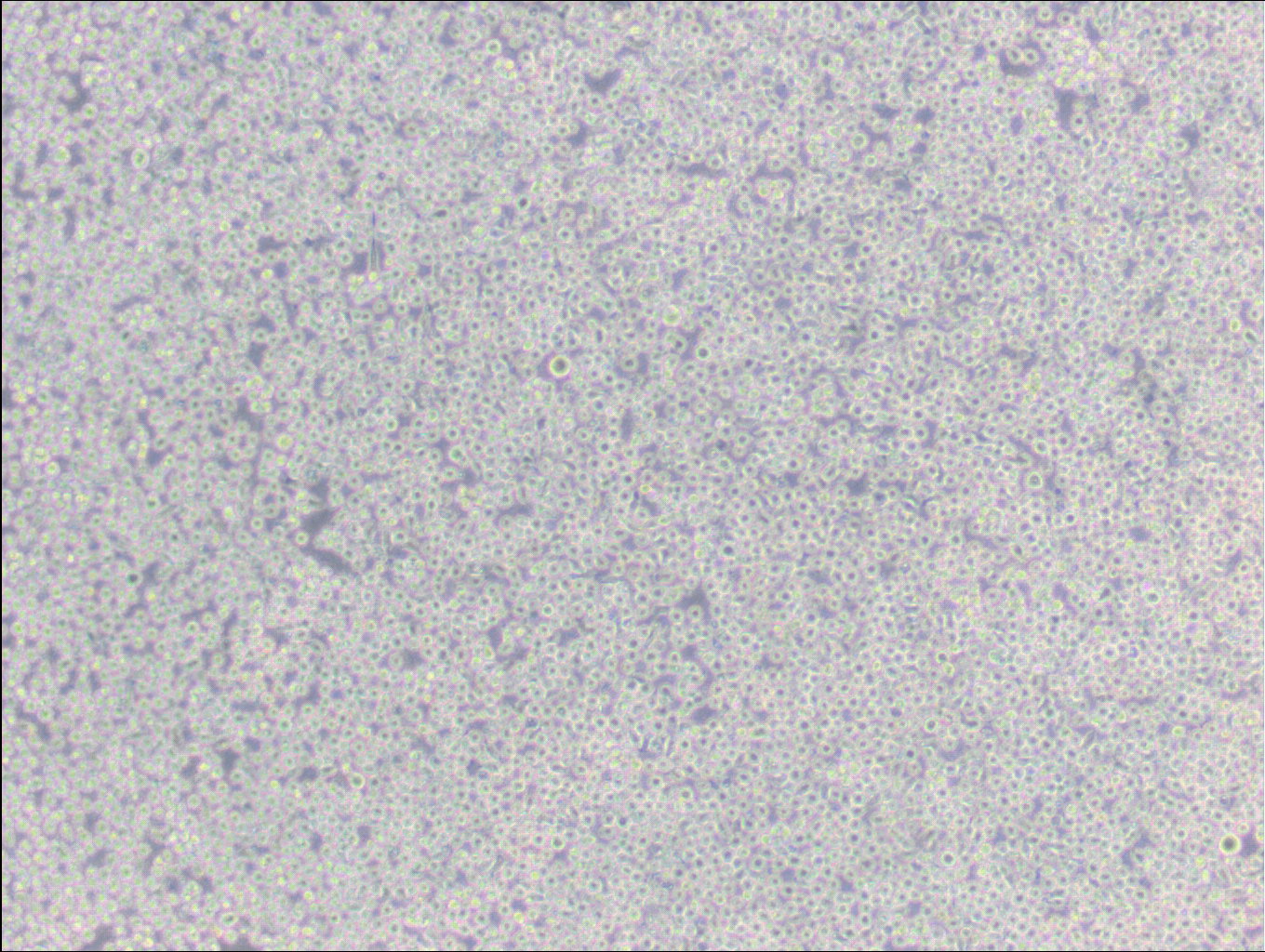

6T-CEM Cells
| Unit |
5 x 10^6 cells/ml |
|---|---|
| Cell Type |
Tumor Cells |
| Tissue Type |
Leukemia cell lines |
| Organism |
Human |
| Donor History |
T-cell acute lymphoblastic leukemia |
| Growth Properties |
Suspension |
| Growth Conditions |
Culture medium: Alpha MEM ,w: 2.0 mM stable Glutamine ,w/o: Ribonucleosides ,w/o: Deoxyribonucleosides ,w: 1.0 mM Sodium pyruvate ,w: 2.2g/L NaHCO3. Supplements: Supplement the medium with 10% FBS. Freeze medium: As a cryopreservation medium ,we use complete growth medium (including FBS) + 10% DMSO for adequate post-thaw viability ,or CM-1 (Cytion catalog number 800100) ,which includes optimized osmoprotectants and metabolic stabilizers to enhance recovery and reduce cryo-induced stress. Incubation atmosphere: 37°C ,5% CO2 ,humidified atmosphere. |
| Immortalization Method | |
| Full Information |

The 6T-CEM cell line is a mutant derivative of the human acute lymphoblastic leukemia (ALL) T-cell line CCRF-CEM. It was developed by exposing the parent CEM cells to 6-thioguanine, leading to the selection of a subline that exhibits resistance to this compound. This resistance is a result of the inactivation of the HPRT gene, which is critical in the purine salvage pathway. The 6T-CEM cells have been particularly valuable in studying drug resistance mechanisms, especially concerning purine analogs like 6-thioguanine. Additionally, these cells are characterized by their secretion of a unique T-cell suppressor inducer factor (SIF), which is not only non-mitogenic and non-cytotoxic but also capable of suppressing T-cell proliferation while sparing B-cell proliferation at certain dilutions. 6T-CEM cells and their subclones, like 6T-CEM-20, have shown a significant increase in the production of this suppressor-inducer factor, which has potential applications in immunological research, particularly in the study of T-cell regulation and immune suppression. The SIF secreted by these cells has been shown to suppress up to 90% of mitogen-induced T-cell proliferation at extremely high dilutions (up to 10^-9), making these cells a potent model for exploring therapeutic strategies that involve modulation of the immune response. The use of these cells in various experimental setups has provided insights into the molecular underpinnings of immune suppression, with potential implications for the development of treatments for autoimmune diseases and in the context of organ transplantation to prevent graft rejection.
Společnost Cytion vznikla v roce 2004 v německém Heidelbergu s jasným vědeckým posláním: dodávat ověřené lidské a zvířecí buněčné linie bez kontaminace, připravené za přísně kontrolovaných laboratorních podmínek.
Postupně se vypracovala ve spolehlivou buněčnou banku, která slouží akademickým laboratořím, biotechnologickým firmám i farmaceutickým výzkumným týmům po celém světě. Klade přitom důraz na reprodukovatelnost výsledků, přísnou kontrolu kvality a dlouhodobá partnerství.