Genetika člověka
 Mikrobiologické aplikace
 NGS
 Rapid testy

 PCR plasty
 Pipetovací špičky
 Plasty pro buněčnou kultivaci
 Systém pro dlouhodobé skladování vzorků
 Zkumavky

 Třepačky
 Suché lázně
 Centrifugy
 End Point cyclery
 Real-time PCR cyclery
 Fluorometry
 Spektrofotometry
 Izolátory nukleových kyselin
 Pipetovací roboty
 Biobanking
 Live Cell Imaging

 Jednokanálové
 Multikanálové
 Sérologické pipety
 Jednorázové pipety

 Buněčné kultury
 PCR, qPCR, RT
 Detekce Mycoplasmat
 Reverzní transkripce

 Alergie
 Intolerance
 Elisa
 Imunologické analyzátory
 Veterinární imunologie
 Alergie u zvířat
 Intolerance u zvířat

 Čtečky identifikačních čipů
 Termočipy
 Biochemie
 Imunoanalýza


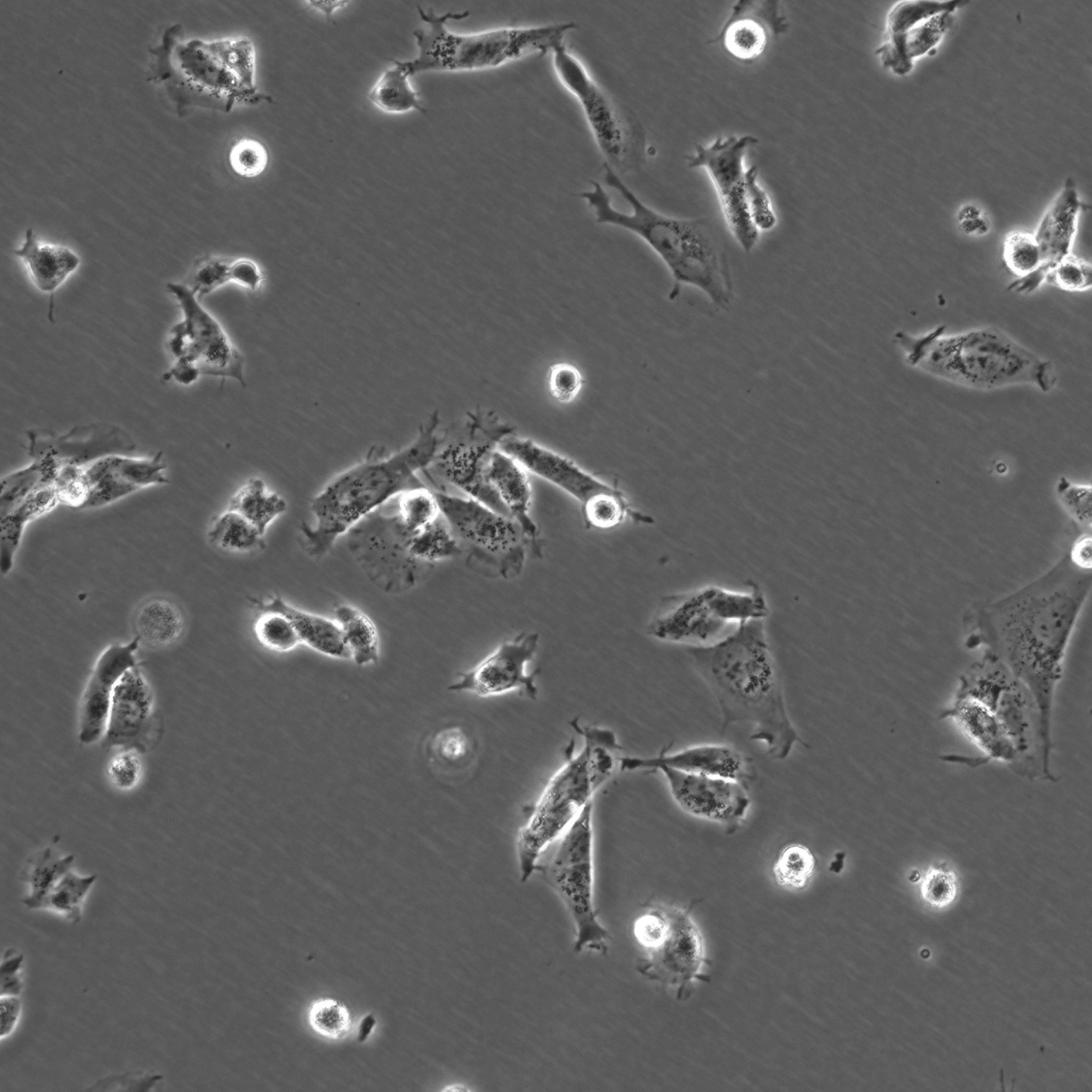

GIST-T1 Cells
| Unit |
3 x 10^6 cells/ml |
|---|---|
| Cell Type |
Tumor Cells |
| Tissue Type |
Intestine cancer cell lines |
| Organism |
Human |
| Donor History |
Gastrointestinal stromal tumor |
| Growth Properties |
Adherent |
| Growth Conditions |
Culture medium: RPMI 1640 ,w: 2.0 mM stable Glutamine ,w: 2.0 g/L NaHCO3 (Cytion article number 820700a). Supplements: Supplement the medium with 10% FBS. Dissociation reagent: Accutase. Seeding density: 1 to 4 x 10⁴ cells/cm². Freeze medium: As a cryopreservation medium ,we use complete growth medium (including FBS) + 10% DMSO for adequate post-thaw viability ,or CM-1 (Cytion catalog number 800100) ,which includes optimized osmoprotectants and metabolic stabilizers to enhance recovery and reduce cryo-induced stress. Incubation atmosphere: 37°C ,5% CO2 ,humidified atmosphere. |
| Immortalization Method | |
| Full Information |

The GIST-T1 cell line is a well-established human gastrointestinal stromal tumor (GIST) model derived from a metastatic pleural lesion secondary to a primary gastric GIST in an adult Japanese woman. Immunohistochemical analyses confirmed strong positivity for c-KIT (CD117) and CD34, two hallmark markers of GIST, while the line was negative for desmin, S-100, and α-smooth muscle actin, confirming its non-muscle and non-neural origin. Cytogenetic studies revealed a hypodiploid karyotype with complex chromosomal abnormalities, including a ring chromosome and several unbalanced translocations. Comparative genomic hybridization (CGH) and FISH analyses showed high-level amplifications at 3q26.1-27, 5p12-15.1, and 7q21.3-36-regions often associated with oncogene amplification in GIST.
GIST-T1 harbors a clinically relevant 57-nucleotide in-frame deletion in exon 11 of the *KIT* gene (V570-Y578), one of the most common mutations in GIST patients and a critical target of tyrosine kinase inhibitors such as imatinib. This has made GIST-T1 an essential model for studying KIT-driven oncogenesis and therapeutic response. In long-term culture, GIST-T1 cells show stable proliferation and retain sensitivity to imatinib unless specifically selected for resistance. Derivative resistant sublines of GIST-T1 have been generated for research purposes and exhibit secondary KIT mutations (e.g., D820V or D820Y), enabling the study of resistance mechanisms and adaptive transcriptional changes. These resistant models show alterations in genes related to detoxification, cell cycle regulation, and apoptosis evasion.
GIST-T1 has also contributed to the discovery of novel oncogenic drivers in GIST, including fusion genes such as EXOC2-AK7, identified in imatinib-resistant sublines. Functional studies demonstrated that these fusion genes enhance proliferative and migratory capacities of GIST cells and sensitize them to imatinib, pointing toward new therapeutic avenues. The presence of GIST-associated super-enhancers and transcription factor networks (e.g., HAND1 in metastatic progression) further reinforces the model’s utility in deciphering the epigenetic and transcriptional architecture of GIST. Altogether, GIST-T1 provides a robust, genetically and phenotypically validated system for studying the biology, drug response, and resistance mechanisms of gastrointestinal stromal tumors.
Společnost Cytion vznikla v roce 2004 v německém Heidelbergu s jasným vědeckým posláním: dodávat ověřené lidské a zvířecí buněčné linie bez kontaminace, připravené za přísně kontrolovaných laboratorních podmínek.
Postupně se vypracovala ve spolehlivou buněčnou banku, která slouží akademickým laboratořím, biotechnologickým firmám i farmaceutickým výzkumným týmům po celém světě. Klade přitom důraz na reprodukovatelnost výsledků, přísnou kontrolu kvality a dlouhodobá partnerství.