
 Genetika člověka
 Mikrobiologické aplikace
 NGS
 Rapid testy

 PCR plasty
 Pipetovací špičky
 Plasty pro buněčnou kultivaci
 Systém pro dlouhodobé skladování vzorků
 Zkumavky

 Třepačky
 Suché lázně
 Centrifugy
 End Point cyclery
 Real-time PCR cyclery
 Fluorometry
 Spektrofotometry
 Izolátory nukleových kyselin
 Pipetovací roboty
 Biobanking
 Live Cell Imaging

 Jednokanálové
 Multikanálové
 Sérologické pipety
 Jednorázové pipety

 Buněčné kultury
 PCR, qPCR, RT
 Detekce Mycoplasmat
 Reverzní transkripce

 Alergie
 Intolerance
 Elisa
 Imunologické analyzátory
 Veterinární imunologie
 Alergie u zvířat
 Intolerance u zvířat

 Čtečky identifikačních čipů
 Termočipy
 Biochemie
 Imunoanalýza


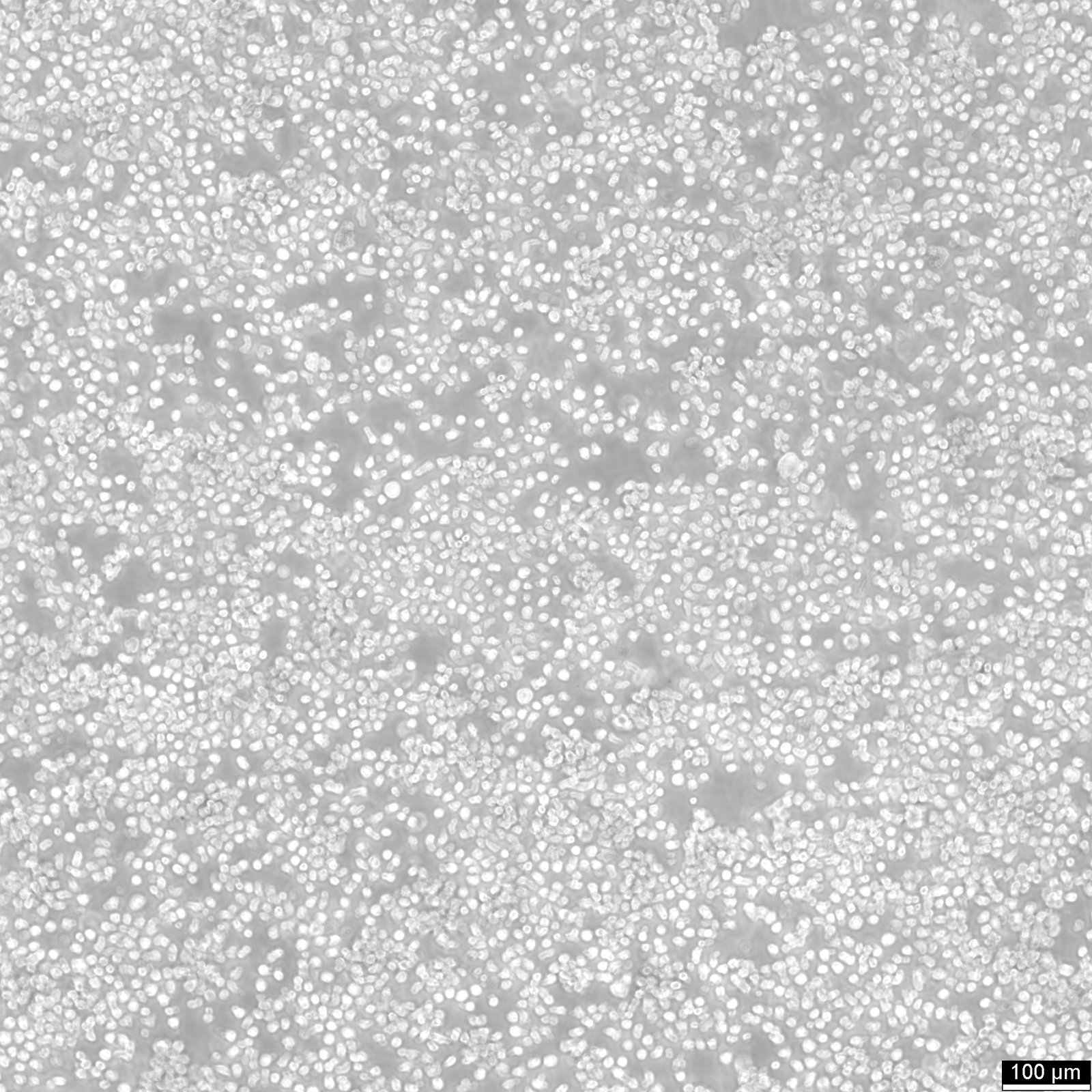

H9 Cells (derivative of HuT 78)
| Unit |
5 x 10^6 cells/ml |
|---|---|
| Cell Type |
Tumor Cells |
| Tissue Type |
Lymphoma cell lines |
| Organism |
Human |
| Donor History |
Sezary syndrome (aggressive form of cutaneous T-cell lymphoma) |
| Growth Properties |
Suspension |
| Growth Conditions |
Culture medium: RPMI 1640 ,w: 2.0 mM stable Glutamine ,w: 2.0 g/L NaHCO3 (Cytion article number 820700a). Supplements: Supplement the medium with 10% FBS. Freeze medium: As a cryopreservation medium ,we use complete growth medium (including FBS) + 10% DMSO for adequate post-thaw viability ,or CM-1 (Cytion catalog number 800100) ,which includes optimized osmoprotectants and metabolic stabilizers to enhance recovery and reduce cryo-induced stress. Incubation atmosphere: 37°C ,5% CO2 ,humidified atmosphere. |
| Immortalization Method | |
| Full Information |

The H9 cell line, derived from a clonal derivative of the HUT 78 T-cell line from an adult patient with Sezary syndrome, exhibits specific clinical characteristics making it highly relevant in HIV research. It is notably permissive for HIV-1 replication, facilitating the isolation and propagation of HIV-1 from the blood of patients with AIDS and pre-AIDS conditions. This feature underscores its utility in studying viral behaviors and testing antiviral strategies under varied clinical scenarios.
Karyotypically, H9 is near triploid with a modal chromosome number of 69, ranging from 58 to 74, and exhibits a 2.5% frequency of higher ploidies. The cell line displays an extremely complex karyotype, with nearly 60% of the chromosomes per cell consisting of structurally altered marker chromosomes, including translocations such as t(3p4q), t(5q6q), t(5p6p), and deletions like del(7)(q32). Such chromosomal abnormalities contribute to the line’s unique genetic profile, influencing its behavior and response to viral infections. The absence of normal chromosomes N4, N5, N6, N7, N10, N13, N18, N19, N20, and X further distinguishes its genetic makeup.
Moreover, the H9 cell line is tumorigenic in nature, demonstrated by successful subcutaneous tumor formation in nude mice when inoculated with 10(7) cells. It expresses a range of antigens including CD4 and various human leukocyte antigens (HLA) like A1, B62, C3, DR4, and DQ3, which play critical roles in immune recognition and response. Its susceptibility to HIV-1 and expression of genes like interleukin-2 (IL-2) are pivotal for investigating immune responses and viral interactions, making H9 a vital tool in the landscape of immunological and virological research.
Společnost Cytion vznikla v roce 2004 v německém Heidelbergu s jasným vědeckým posláním: dodávat ověřené lidské a zvířecí buněčné linie bez kontaminace, připravené za přísně kontrolovaných laboratorních podmínek.
Postupně se vypracovala ve spolehlivou buněčnou banku, která slouží akademickým laboratořím, biotechnologickým firmám i farmaceutickým výzkumným týmům po celém světě. Klade přitom důraz na reprodukovatelnost výsledků, přísnou kontrolu kvality a dlouhodobá partnerství.