Genetika člověka
 Mikrobiologické aplikace
 NGS
 Rapid testy

 PCR plasty
 Pipetovací špičky
 Plasty pro buněčnou kultivaci
 Systém pro dlouhodobé skladování vzorků
 Zkumavky

 Třepačky
 Suché lázně
 Centrifugy
 End Point cyclery
 Real-time PCR cyclery
 Fluorometry
 Spektrofotometry
 Izolátory nukleových kyselin
 Pipetovací roboty
 Biobanking
 Live Cell Imaging

 Jednokanálové
 Multikanálové
 Sérologické pipety
 Jednorázové pipety

 Buněčné kultury
 PCR, qPCR, RT
 Detekce Mycoplasmat
 Reverzní transkripce

 Alergie
 Intolerance
 Elisa
 Imunologické analyzátory
 Veterinární imunologie
 Alergie u zvířat
 Intolerance u zvířat

 Čtečky identifikačních čipů
 Termočipy
 Biochemie
 Imunoanalýza


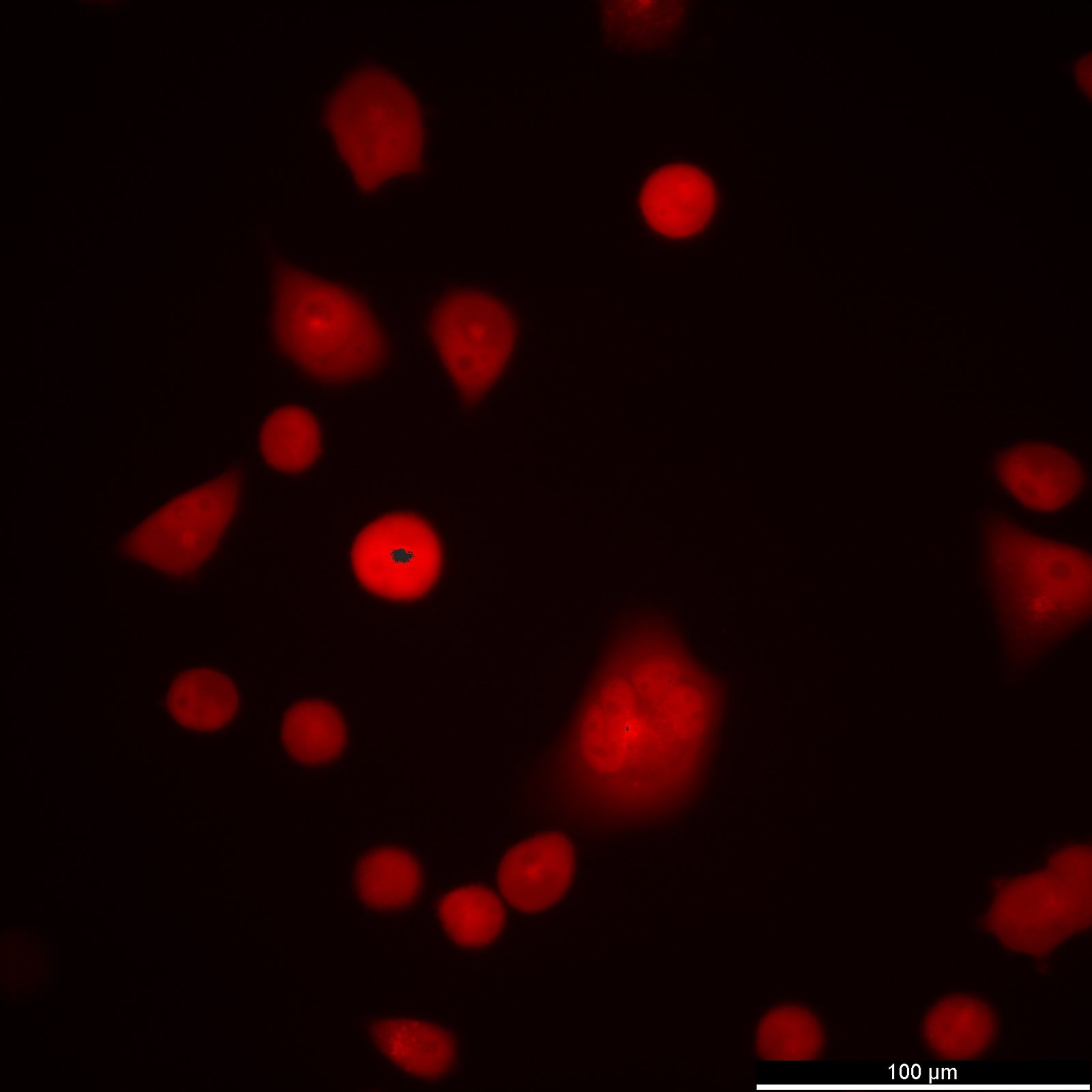

NCI-H1299-RFP Cells
| Unit |
3 x 10^6 cells/ml |
|---|---|
| Cell Type |
Stable (KO/Expressing) Cells |
| Tissue Type |
Lung cancer cell lines ,NCI cell lines ,Reporter-labeled cells |
| Organism |
Human |
| Donor History |
Large cell carcinoma |
| Growth Properties |
Adherent |
| Growth Conditions |
Culture medium: RPMI 1640 ,w: 2.0 mM stable Glutamine ,w: 2.0 g/L NaHCO3 (Cytion article number 820700a). Supplements: Supplement the medium with 10% FBS. Dissociation reagent: Accutase. Seeding density: 1 to 3 × 10⁴ cells/cm². Freeze medium: As a cryopreservation medium ,we use complete growth medium (including FBS) + 10% DMSO for adequate post-thaw viability ,or CM-1 (Cytion catalog number 800100) ,which includes optimized osmoprotectants and metabolic stabilizers to enhance recovery and reduce cryo-induced stress. Incubation atmosphere: 37°C ,5% CO2 ,humidified atmosphere. |
| Immortalization Method | |
| Full Information |

The NCI-H1299 RFP cells, modified to include a reporter in the DAPK1 gene, are not only useful for studying specific gene activation but also provide a broader understanding of how cells react to epigenetic drugs globally. By using a technique called Cap Analysis of Gene Expression (CAGE), researchers have been able to detail changes in where transcription starts across the genome in response to treatments with DNMTi (DAC), HDACi (SAHA or SB939), or their combinations. This method reveals not just the expected reactivation of the DAPK1 gene but also the emergence of new transcription start sites, called treatment-induced non-annotated TSSs (TINATs), especially under drug treatment. These new start sites are typically located in regions of the genome that do not usually produce proteins and lead to the creation of new RNA molecules that could potentially code for proteins. Further analysis shows that these new RNA molecules can sometimes merge with existing ones to form what are known as TINAT-exon fusion transcripts. Depending on how these transcripts are spliced, they can translate into new, atypical proteins. This process has been confirmed through laboratory techniques that demonstrate these transcripts can indeed lead to the production of new protein forms. These proteins might interact abnormally within the cell or be recognized as foreign by the immune system, potentially offering new targets for cancer therapy. The activation of these TINATs involves intricate changes in both DNA methylation and histone modifications, illustrating a complex interaction between these epigenetic factors under drug treatment. Particularly, the combined use of DAC and SB939 shows a greater effect, boosting the expression of these novel transcripts more than when either drug is used alone. Understanding these interactions and their outcomes helps clarify how epigenetic therapies alter cell behavior and opens up possibilities for new cancer treatments that leverage these complex molecular changes.
Společnost Cytion vznikla v roce 2004 v německém Heidelbergu s jasným vědeckým posláním: dodávat ověřené lidské a zvířecí buněčné linie bez kontaminace, připravené za přísně kontrolovaných laboratorních podmínek.
Postupně se vypracovala ve spolehlivou buněčnou banku, která slouží akademickým laboratořím, biotechnologickým firmám i farmaceutickým výzkumným týmům po celém světě. Klade přitom důraz na reprodukovatelnost výsledků, přísnou kontrolu kvality a dlouhodobá partnerství.