
 Genetika člověka
 Mikrobiologické aplikace
 NGS
 Rapid testy

 PCR plasty
 Pipetovací špičky
 Plasty pro buněčnou kultivaci
 Systém pro dlouhodobé skladování vzorků
 Zkumavky

 Třepačky
 Suché lázně
 Centrifugy
 End Point cyclery
 Real-time PCR cyclery
 Fluorometry
 Spektrofotometry
 Izolátory nukleových kyselin
 Pipetovací roboty
 Biobanking
 Live Cell Imaging

 Jednokanálové
 Multikanálové
 Sérologické pipety
 Jednorázové pipety

 Buněčné kultury
 PCR, qPCR, RT
 Detekce Mycoplasmat
 Reverzní transkripce

 Alergie
 Intolerance
 Elisa
 Imunologické analyzátory
 Veterinární imunologie
 Alergie u zvířat
 Intolerance u zvířat

 Čtečky identifikačních čipů
 Termočipy
 Biochemie
 Imunoanalýza


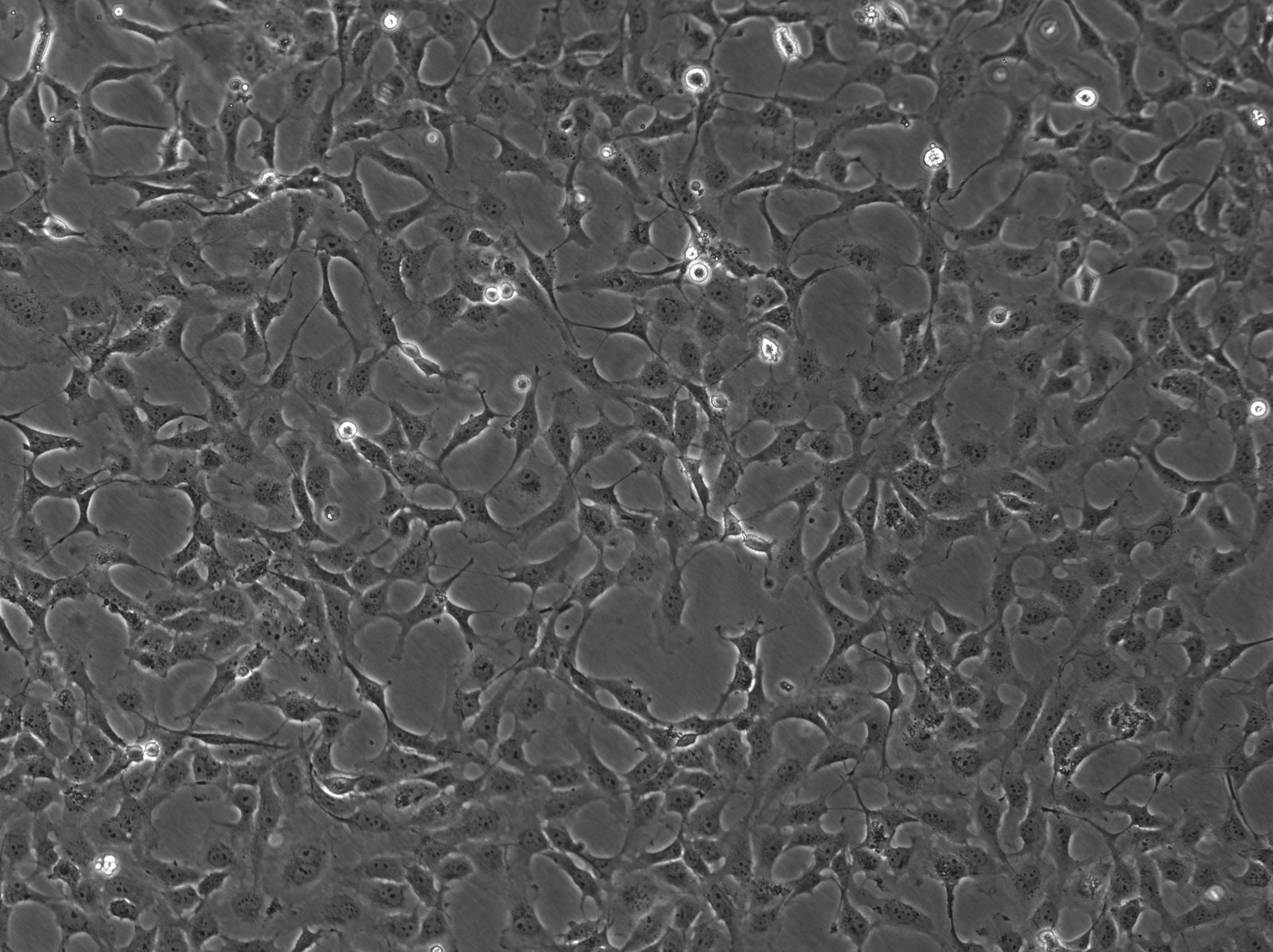

SRA01-04 Cells
| Unit |
3 x 10^6 cells/ml |
|---|---|
| Cell Type |
Immortalized Cells |
| Tissue Type |
Head-Neck cancer cell lines ,Neuroblastoma cell lines |
| Organism |
Human |
| Donor History | |
| Growth Properties |
Adherent |
| Growth Conditions |
Culture medium: DMEM low glucose. Supplements: Supplement the medium with 10% FBS. Dissociation reagent: Accutase. Seeding density: 2-4*10^4/cm². Freeze medium: As a cryopreservation medium ,we use complete growth medium (including FBS) + 10% DMSO for adequate post-thaw viability ,or CM-1 (Cytion catalog number 800100) ,which includes optimized osmoprotectants and metabolic stabilizers to enhance recovery and reduce cryo-induced stress. Incubation atmosphere: 37°C ,5% CO2 ,humidified atmosphere. |
| Immortalization Method | |
| Full Information |

The SRA01/04 cell line is an immortalized human lens epithelial cell line developed to overcome the limitations associated with primary cultures of human lens epithelial (HLE) cells. These limitations include their low proliferative capacity and the difficulty of obtaining sufficient quantities of cells from donor lenses. SRA01/04 was derived from primary HLE cells obtained from infants undergoing surgery for retinopathy of prematurity. The immortalization was achieved by transfection with a plasmid carrying the SV40 large T antigen gene under the control of the RSV promoter. This approach avoids the use of live virus and permits selection of a uniform clone with consistent characteristics.
SRA01/04 cells exhibit stable proliferation over 130 passages with a population doubling level of approximately 3.5 per passage. Morphologically, they maintain a monolayer with epithelial characteristics. Chromosomal analysis revealed a hypotetraploid karyotype, consistent with an immortalized status. The isozyme phenotype confirmed their human origin. Importantly, the cell line retains lens-specific molecular features, including the expression of αA- and βB-crystallins and aldose reductase, though at lower protein levels than seen in primary HLE cultures. mRNA for both crystallins was also detected via RT-PCR, and sequencing confirmed 100% identity with published human sequences. This makes SRA01/04 the first established human lens cell line shown to express both αA- and βB-crystallins.
In addition to crystallin expression, SRA01/04 expresses aldose reductase, an enzyme involved in the polyol pathway, which is relevant to cataractogenesis. While optimal growth requires 20% fetal bovine serum, the cells can survive and proliferate with reduced serum levels or even in serum-free conditions if pre-attached to culture dishes. This adaptability, along with their stable lens-specific phenotype, renders SRA01/04 a valuable model for studying lens physiology, gene regulation in the lens epithelium, and mechanisms underlying cataract formation.
Společnost Cytion vznikla v roce 2004 v německém Heidelbergu s jasným vědeckým posláním: dodávat ověřené lidské a zvířecí buněčné linie bez kontaminace, připravené za přísně kontrolovaných laboratorních podmínek.
Postupně se vypracovala ve spolehlivou buněčnou banku, která slouží akademickým laboratořím, biotechnologickým firmám i farmaceutickým výzkumným týmům po celém světě. Klade přitom důraz na reprodukovatelnost výsledků, přísnou kontrolu kvality a dlouhodobá partnerství.