
 Genetika člověka
 Mikrobiologické aplikace
 NGS
NGS Rapid testy
 PCR plasty
 Pipetovací špičky
 Plasty pro buněčnou kultivaci
 Systém pro dlouhodobé skladování vzorků
 Zkumavky
 Třepačky
 Suché lázně
 Centrifugy
 End Point cyclery
 Real-time PCR cyclery
 Fluorometry
 Spektrofotometry
 Izolátory nukleových kyselin
 Pipetovací roboty
 Biobanking
 Live Cell Imaging
 Jednokanálové
 Multikanálové
 Sérologické pipety
 Jednorázové pipety
 Buněčné kultury
 PCR, qPCR, RT
 Detekce Mycoplasmat
 Reverzní transkripce
 Alergie
 Intolerance
 Elisa
Elisa Imunologické analyzátory
 Veterinární imunologie
 Alergie u zvířat
 Intolerance u zvířat
 Biochemie
 Imunoanalýza
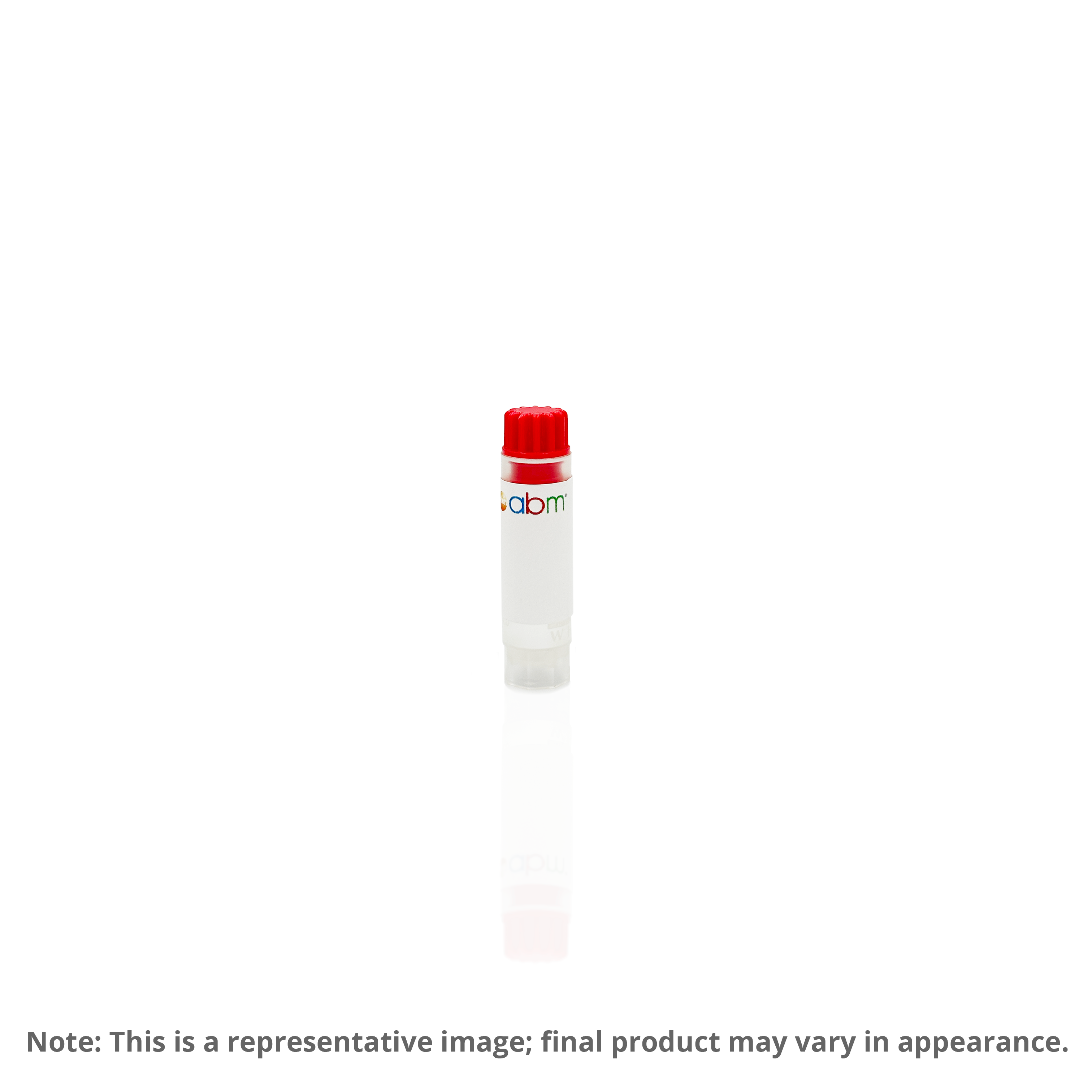

GFP Control C4-2 Cell Line (Lenti-CMV-CBH-GFP-2A-Puro-Blank )
| Unit |
1×10⁶ cells / 1.0 ml |
|---|---|
| Cell Type |
Stable (KO/Expressing) Cells |
| Tissue Type |
Prostate |
| Organism |
Human (H. sapiens) |
| Donor History | |
| Growth Properties |
Adherent ,epithelial-like |
| Growth Conditions |
PriCoat™ T25 Flasks (G299) or Applied Cell Extracellular Matrix (G422) are recommended for optimal cell culture. RPMI 1640 Medium (TM503) + 10% FBS + 1% Penicillin/Streptomycin Solution (G255) ,37.0°C ,5% CO₂. 1.0 µg/ml Puromycin (G264) for selection. Note: Selection drugs should be added to the culture medium after the first passage to ensure cells have recovered from freeze-thaw conditions. |
| Immortalization Method | |
| Full Information |
https://www.abmgood.com/GFP-Control-C4-2-Cell-Line-Lenti-CMV-CBH-GFP-2A-Puro-Blank-T9826.html |
The GFP Control C4-2 Cell Line, transduced with Lenti-CMV-CBH-GFP-2A-Puro-Blank vector, is a vital tool for cancer research, especially in studies focused on prostate cancer. This cell line is derived from the C4-2 prostate cancer cell line, which itself is a subline of the LNCaP cells known for their androgen sensitivity and ability to form osteoblastic lesions, mimicking advanced prostate cancer. The introduction of the Lenti-CMV-CBH-GFP-2A-Puro-Blank vector serves multiple purposes. Green Fluorescent Protein (GFP) under the control of the CMV (Cytomegalovirus) promoter allows for easy visualization and tracking of the cells under fluorescent microscopy. This feature is invaluable for in vitro experiments focusing on cell proliferation, migration, and drug response, as well as for in vivo studies where tracking the localization and metastatic spread of prostate cancer cells is crucial.Inclusion of a puromycin resistance gene (Puro) enables the selection of successfully transduced cells, ensuring a population of cells uniformly expressing GFP. This selective pressure is essential for maintaining a stable cell line over prolonged experiments.Overall, this cell line is a usefule control in experiments to establish the baseline behviour of prostate cancer cells without specific modifications.